3-Day Tour of Popular Spots: Ginzan Onsen and Zao
- Suggested Time : 3 days / 2 nights
- Transport Options : Drive
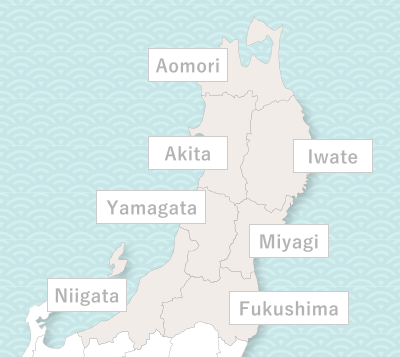


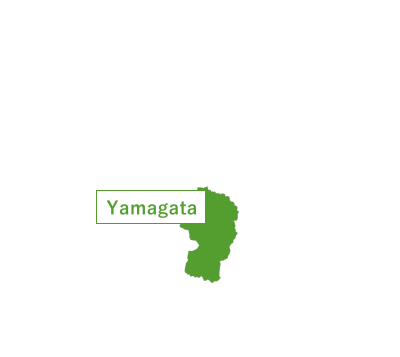
A journey to feel energy through spiritual experiences, visiting popular destinations like Ginzan Onsen and Mount Zao, and exploring Dewa Sanzan where Japan's unique faith culture can still be felt today.
START
Day1
Yamagata
Risshaku-ji Temple
The historic temple rising to the sky along delightful mountain paths described in the great Haiku master’s poem
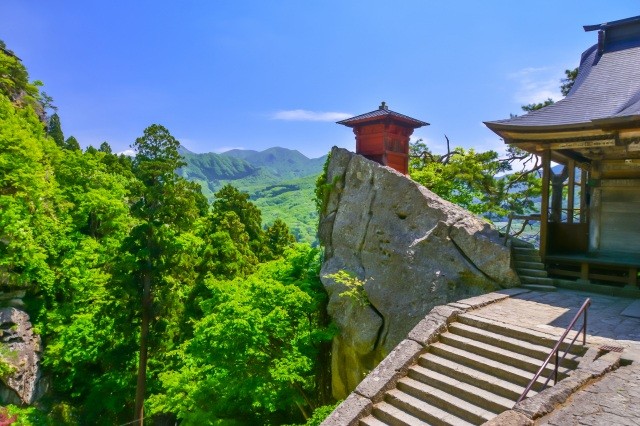
Risshaku-ji Temple is popularly known as Yamadera (Mountain Temple). The rocky mountain itself is a sacred location for ascetic Zen practices. Visitors can enjoy breath-taking views along the one-hour path from the foot of the mountain to Okunoin Temple and Daibutsuden Hall at the top. The great Haiku master Basho Matsuo composed one of his best-known Haiku poems “Shizukesa ya/iwa ni shimiiru/semi no koe” in the work “Oku no Hosomichi” (Narrow Road to the Deep North) while walking this path.
The series of 1,015 stone steps to Okunoin Temple is said to steadily release visitors from their worldly desires as they ascend. The many historic sites and scenic locations along the way encourage visitors to continue the climb while enriching the mind and senses.
The path begins with Konpo Chudo Hall, the oldest cedar wood building in Japan and a designated Important Cultural Property. Midahora Rock is a lucky location that is said to bring happiness if visitors can find the figure of Buddha on the side of the rock eroded by wind and rain over thousands of years. Passing through the Niomon Gate with a pair of fierce guardian god statues brings you to the majestic Kaizando and Nokyodo Halls. The red Nokyodo Hall sitting on a craggy mountain outcrop is an iconic view of the Yamadera. The steps on from Kaizando Hall take visitors to Godaido Hall which is evocative of a traditional Noh stage offering a panoramic view of the surrounding mountains. The final destinations are Okunoin Temple and Daibutsuden Hall, which is said to expel evil spirits.
After exploring the mountain temples be sure to enjoy the variety of local specialties available at the nearby shops including Yamadera Chikara Konjac, cherry ice cream and Dashi Soba noodles!
The series of 1,015 stone steps to Okunoin Temple is said to steadily release visitors from their worldly desires as they ascend. The many historic sites and scenic locations along the way encourage visitors to continue the climb while enriching the mind and senses.
The path begins with Konpo Chudo Hall, the oldest cedar wood building in Japan and a designated Important Cultural Property. Midahora Rock is a lucky location that is said to bring happiness if visitors can find the figure of Buddha on the side of the rock eroded by wind and rain over thousands of years. Passing through the Niomon Gate with a pair of fierce guardian god statues brings you to the majestic Kaizando and Nokyodo Halls. The red Nokyodo Hall sitting on a craggy mountain outcrop is an iconic view of the Yamadera. The steps on from Kaizando Hall take visitors to Godaido Hall which is evocative of a traditional Noh stage offering a panoramic view of the surrounding mountains. The final destinations are Okunoin Temple and Daibutsuden Hall, which is said to expel evil spirits.
After exploring the mountain temples be sure to enjoy the variety of local specialties available at the nearby shops including Yamadera Chikara Konjac, cherry ice cream and Dashi Soba noodles!
Early Summer's Delicious Cherry Picking
Perfect for souvenirs! For the best cherries, visit orchards in Tendō City!
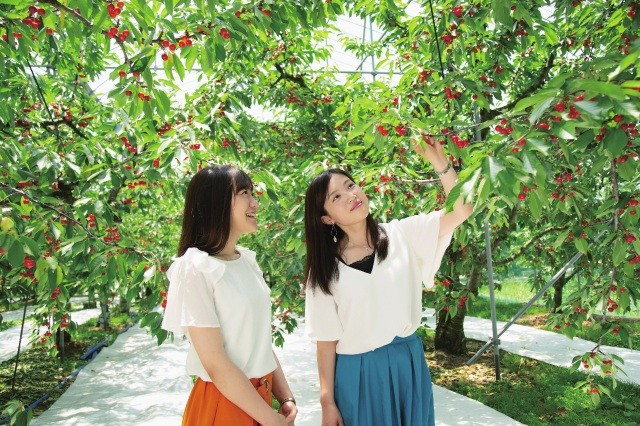
At 14 tourist orchards throughout Tendō City, you can experience picking Yamagata Prefecture's famous early summer delicacy: sweet and delicious cherries. Cherries picked by your own hands taste exceptionally good. These bright red cherries, grown with plenty of sunshine, are delicious eaten right there and make wonderful souvenirs. How about some freshly picked fruit that looks like jewels? All participants in the picking experience receive a complimentary souvenir!
Shogi Piece
Japan's Premier Shogi Piece Production Center: Tendō
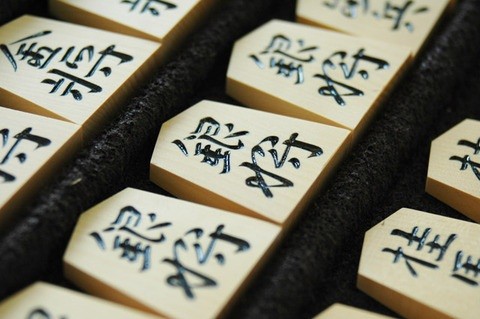
The shogi piece industry in Tendō began to be promoted by the Tendō Oda domain during the Edo period.
Shogi piece making is said to have started as a side job for lower-ranking samurai. Amid the Tendō Oda domain's strained finances, these samurai struggled with poverty and supplemented their household income through side work. Shogi piece production was one such endeavor.
It is said that Yoshida Daihachi, then a senior retainer of the Oda domain and later known as a loyalist samurai, encouraged domain samurai who could not live on their stipends alone to make shogi pieces. Other council members opposed samurai engaging in manual crafts.
However, Yoshida Daihachi believed that shogi was connected to military strategy and tactics. He argued that playing the game or making the pieces did not dishonor the samurai. He is said to have widely introduced the manufacturing techniques.
Today, this history continues unbroken. Shogi pieces are synonymous with Tendo, and Tendo is synonymous with shogi pieces, beloved by all.
Shogi piece making is said to have started as a side job for lower-ranking samurai. Amid the Tendō Oda domain's strained finances, these samurai struggled with poverty and supplemented their household income through side work. Shogi piece production was one such endeavor.
It is said that Yoshida Daihachi, then a senior retainer of the Oda domain and later known as a loyalist samurai, encouraged domain samurai who could not live on their stipends alone to make shogi pieces. Other council members opposed samurai engaging in manual crafts.
However, Yoshida Daihachi believed that shogi was connected to military strategy and tactics. He argued that playing the game or making the pieces did not dishonor the samurai. He is said to have widely introduced the manufacturing techniques.
Today, this history continues unbroken. Shogi pieces are synonymous with Tendo, and Tendo is synonymous with shogi pieces, beloved by all.
Ginzan Onsen
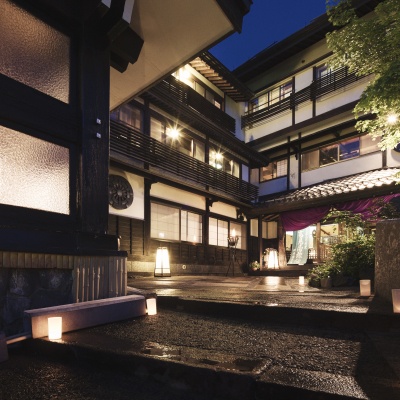
This classic hot spring town lined with traditional wooden architecture is full of photogenic nostalgia!
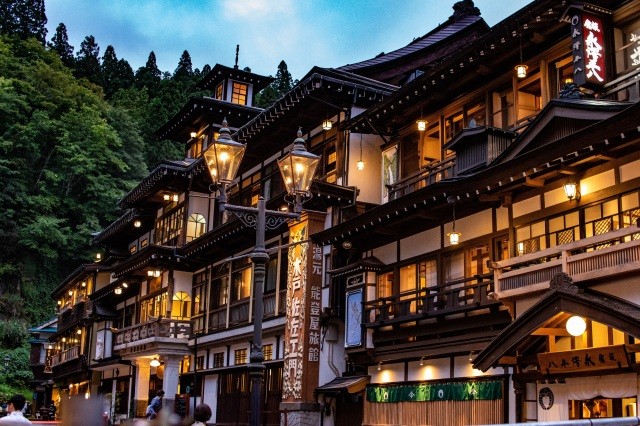
Travel back in time to classical Japan in Ginzan Onsen! The town is home to wooden hot spring inns lining each side of the Ginzan River and resonates with nostalgic beauty when illuminated at night by gas street lamps. The view reminds visitors of scenes from the famous film “Sprinted Away” by Hayao Miyazaki. Before that the town was used as a location of NHK’s popular TV drama series “Oshin”, a monumental hit of 1983. The night view of the town blanketed in snow beneath the warm streetlights is particularly photogenic during winter.
Walking along the town’s streets visitors will find colourful pictures known as Kote-e on the walls of hot spring inns and snowflake designs on tiles on the roads. Relax your feet in hot spring water rising directly from its source at the “Warashiyu” footbaths along the Ginzan River while exploring the town! The compact town is suitable for strolling around and has a variety of cafes, eateries and gift shops. Classical costumes of the Taisho period can be rented from local shops to enhance the Onsen experience and take visitors back to the time when Japanese arts and culture flourished following exposure to western cultural influences. Why not enjoy strolling around this picturesque town in a chic costume?
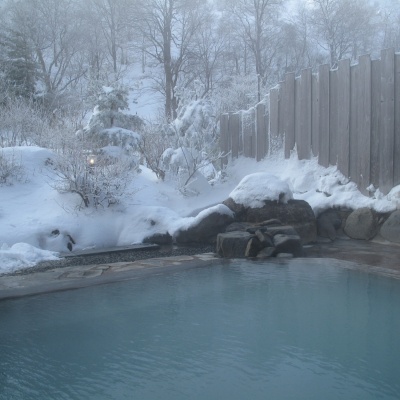
The town is covered with deep snow in winter however it is easily accessible via a 3-hour Shinkansen from Tokyo and direct 40-minute bus ride. A relaxing soak in a hot spring surrounded by snowy scenery is an exceptional delight! After a warm hot spring bath, enjoy savouring local specialties including the local Wagyu beef “Obanazawa” and Obanazawa Soba noodles!
Neighbouring natural attractions include Senshinkyo Gorge, a scenic location during the seasons of verdant greens and autumn leaves and the 22-metre vertical drop of Shirogane-no-taki Waterfall.
A thematic journey in the Tohoku region:Hot springs
Walking along the town’s streets visitors will find colourful pictures known as Kote-e on the walls of hot spring inns and snowflake designs on tiles on the roads. Relax your feet in hot spring water rising directly from its source at the “Warashiyu” footbaths along the Ginzan River while exploring the town! The compact town is suitable for strolling around and has a variety of cafes, eateries and gift shops. Classical costumes of the Taisho period can be rented from local shops to enhance the Onsen experience and take visitors back to the time when Japanese arts and culture flourished following exposure to western cultural influences. Why not enjoy strolling around this picturesque town in a chic costume?
The town is covered with deep snow in winter however it is easily accessible via a 3-hour Shinkansen from Tokyo and direct 40-minute bus ride. A relaxing soak in a hot spring surrounded by snowy scenery is an exceptional delight! After a warm hot spring bath, enjoy savouring local specialties including the local Wagyu beef “Obanazawa” and Obanazawa Soba noodles!
Neighbouring natural attractions include Senshinkyo Gorge, a scenic location during the seasons of verdant greens and autumn leaves and the 22-metre vertical drop of Shirogane-no-taki Waterfall.
A thematic journey in the Tohoku region:Hot springs
Tendo Onsen
A Healing Journey at Tendō Hot Springs
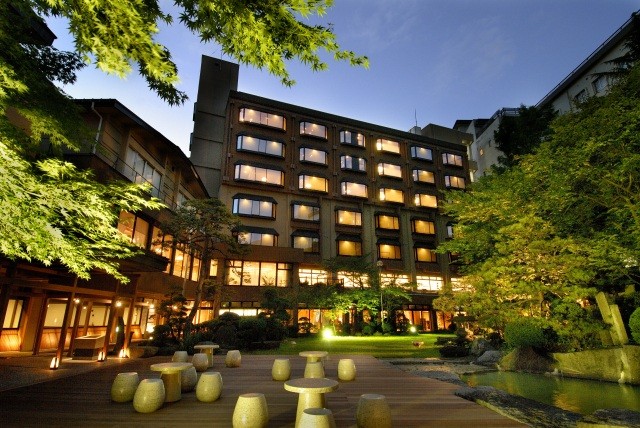
Tendo Onsen, blessed with a location near the center of Yamagata Prefecture and excellent transportation access, has developed as a lodging base for touring the prefecture. Accommodations range from modern hotels to traditional Japanese-style inns. It is a hot spring rich in travel sentiment, gently enveloping the traveler's mood throughout the seasons. Selected for the “34th Japan's Top 100 Hot Springs” by the Tourism Economy News, Tendo Onsen also boasts two establishments chosen for the “Top 250 Popular Hot Spring Inns and Hotels” and “Five-Star Lodgings”: “Smile Inn Takinoyu” and “Tendo Hotel”. Day-trip bathing is also available, allowing visitors to enjoy the hot springs with ease.
Day2
Depart from accommodation
Mt. Haguro
The sacred mountain of cedar trees awarded three stars in the Michelin Green Guide
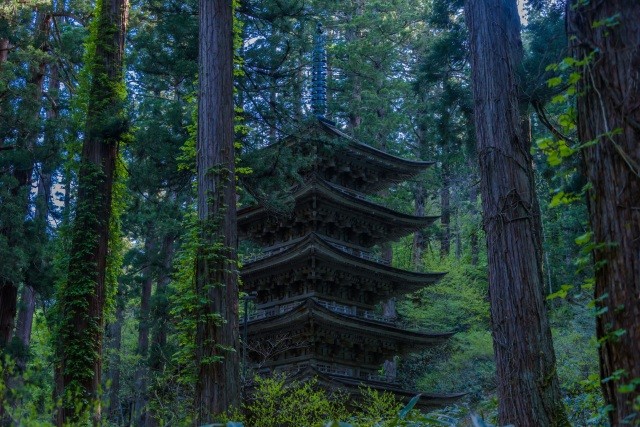
Mount Haguro, Mount Gassan and Mount Yudono, known as the Three Mountains of Dewa, have been revered as sacred mountains for hundreds of years. Travelling to these three mountains is said to be a journey of reincarnation as believers pray for the present on Mount Haguro, for the past on Mount Gassan and for the future on Mount Yudono. A popular proverb goes “a western pilgrimage to Ise Shrine and an eastern pilgrimage to the Three Mountains of Dewa”, and these mountains are a well-known destination for a once in a lifetime visit. The 1.7-kilometre walking route of Mount Haguro takes one hour from Zuishinmon Gate to Sanjingosaiden Shrine.
The row of cedar trees along the route from Zuishinmon Gate to the top of the mountain has been awarded three stars in the Michelin Green Guide. After crossing the vermillion Shinkyo Bridge a five-storey pagoda rises within the row of massive cedar trees, some of which are a thousand years old and known as “Jijisugi”. This is a popular location for photos as it combines two officially recognised sites – the pagoda, a national treasure, and the massive cedar trees, an official natural monument. The illuminated view of the pagoda surrounded by the cedar trees at night is fantastic during summer.
The following 2,446 stone steps up the mountain are a challenge that is well-rewarded. Look out for the 33 carved pictures of the three slopes on the steps, spot them all and your wish will come true! At the end of the second slope, the Ninosaka Chaya teahouse is the perfect place for a refreshment with the famous Chikara-mochi (‘great strength’ rice cakes) while enjoying the splendid view of the Shonai plains. Continuing up the third slope to the red gateway, the goal is a visit to Sanjingosaiden Shrine enshrining gods of the three mountains of Dewa. The magnificent views from the top of the mountain, not to mention the sense of achievement, are well worth the effort!
A thematic journey in the Tohoku region:Nature・Spectacles
The row of cedar trees along the route from Zuishinmon Gate to the top of the mountain has been awarded three stars in the Michelin Green Guide. After crossing the vermillion Shinkyo Bridge a five-storey pagoda rises within the row of massive cedar trees, some of which are a thousand years old and known as “Jijisugi”. This is a popular location for photos as it combines two officially recognised sites – the pagoda, a national treasure, and the massive cedar trees, an official natural monument. The illuminated view of the pagoda surrounded by the cedar trees at night is fantastic during summer.
The following 2,446 stone steps up the mountain are a challenge that is well-rewarded. Look out for the 33 carved pictures of the three slopes on the steps, spot them all and your wish will come true! At the end of the second slope, the Ninosaka Chaya teahouse is the perfect place for a refreshment with the famous Chikara-mochi (‘great strength’ rice cakes) while enjoying the splendid view of the Shonai plains. Continuing up the third slope to the red gateway, the goal is a visit to Sanjingosaiden Shrine enshrining gods of the three mountains of Dewa. The magnificent views from the top of the mountain, not to mention the sense of achievement, are well worth the effort!
A thematic journey in the Tohoku region:Nature・Spectacles
Yudonosan Shrine
This mysterious sacred location is the last stop of the Three Mountains of Dewa
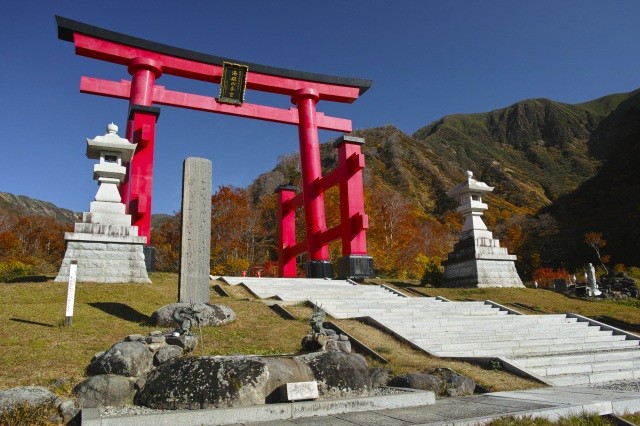
Mount Haguro, Mount Gassan and Mount Yudono, known as the Three Mountains of Dewa, have been revered as sacred mountains for hundreds of years. Travelling to these three mountains is said to be a journey of reincarnation as believers pray for the present on Mount Haguro, for the past on Mount Gassan and for the future on Mount Yudono. A popular proverb goes “a western pilgrimage to Ise Shrine and an eastern pilgrimage to the Three Mountains of Dewa”, and these mountains are a well-known destination for a once in a lifetime visit.
Mount Yudono is the final destination of the pilgrimage where mountain priests come for ascetic Zen practices after performing austere rituals in Mount Gassan and Mount Haguro. As a particularly sacred location there are a number of regulations visitors must observe when visiting Yudonosan Shrine. Photography is not allowed and in order to preserve the shrine’s mystery visitors are prohibited from talking about what they see and hear inside its precincts. The wearing of shoes is not allowed on the shrine’s grounds as the area is regarded as a sacred place separate from the outside world. The barefoot walk along the approach to the shrine gives visitors a feel for the earth’s energy.
There is no main shrine building, instead the object of worship here is a massive ginger-coloured rock spouting hot water. After purifying themselves at the shrine entrance, visitors are finally allowed to face the sacred rock to pray.
Meanwhile, Mount Yudono is known as a lucky location for matchmaking and is nicknamed “the Mountain of Lovers”. Unique good luck charms for romance popular with local women are available from the shrine.
Yudonosan Sanrojo beside the shrine’s main gate offers accommodation with hot spring facilities (reservations are required), day visits are also available. Note that visitors need to make a bow to the altar at the bathhouse before taking a bath!
Mount Yudono is the final destination of the pilgrimage where mountain priests come for ascetic Zen practices after performing austere rituals in Mount Gassan and Mount Haguro. As a particularly sacred location there are a number of regulations visitors must observe when visiting Yudonosan Shrine. Photography is not allowed and in order to preserve the shrine’s mystery visitors are prohibited from talking about what they see and hear inside its precincts. The wearing of shoes is not allowed on the shrine’s grounds as the area is regarded as a sacred place separate from the outside world. The barefoot walk along the approach to the shrine gives visitors a feel for the earth’s energy.
There is no main shrine building, instead the object of worship here is a massive ginger-coloured rock spouting hot water. After purifying themselves at the shrine entrance, visitors are finally allowed to face the sacred rock to pray.
Meanwhile, Mount Yudono is known as a lucky location for matchmaking and is nicknamed “the Mountain of Lovers”. Unique good luck charms for romance popular with local women are available from the shrine.
Yudonosan Sanrojo beside the shrine’s main gate offers accommodation with hot spring facilities (reservations are required), day visits are also available. Note that visitors need to make a bow to the altar at the bathhouse before taking a bath!
French-Style Regional Cuisine Sakata French
Renowned French restaurants featuring creative cuisine that makes the most of abundant ingredients sourced from the sea, mountains, and countryside are scattered throughout the region.
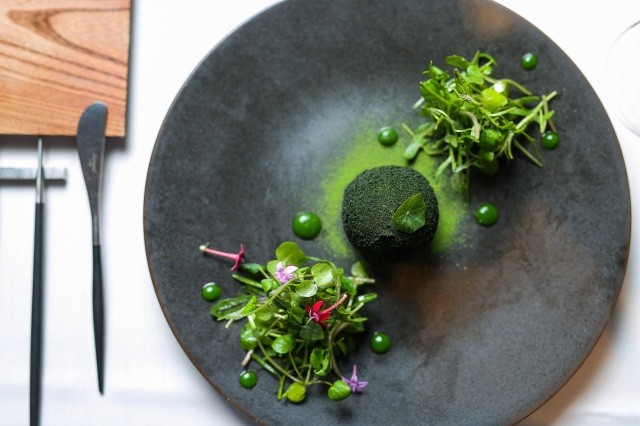
Sakata French cuisine, cherished and nurtured by the local community. We extensively use ingredients from Shonai and Sakata, including the abundant seafood of the Sea of Japan, mountain delicacies like those from Mount Chokai, and crops from the fertile lands represented by the Shonai Plain. Guests can savor dishes where the chef skillfully highlights seasonal ingredients with creative flair. This refined cuisine is highly acclaimed, attracting many prominent visitors. Prices are reasonable; please enjoy it for lunch or dinner.
Western Cuisine Kagetsu (0234-25-3966 http://www.kagetsu-sakata.com/)
Restaurant Nico (0234-28-9777 http://nico-sakata.com/)
Garden Nature Fuki no Tou (0234-26-1117 https://www.richgarden.co.jp/restaurant/)
French-Style Regional Cuisine Le Pot-au-feu (0234-26-2218 https://lepotaufeu.com/restaurant/)
WineBar&Dinning Ravi (0234-23-5228 https://www.ravi-sakata.com/)
Western-Style Regional Cuisine Restaurant Minosuke (0234-22-2377 http://www.e-yamagata.com/eyamab/0234222377/)
Other restaurants in the city
Western Cuisine Kagetsu (0234-25-3966 http://www.kagetsu-sakata.com/)
Restaurant Nico (0234-28-9777 http://nico-sakata.com/)
Garden Nature Fuki no Tou (0234-26-1117 https://www.richgarden.co.jp/restaurant/)
French-Style Regional Cuisine Le Pot-au-feu (0234-26-2218 https://lepotaufeu.com/restaurant/)
WineBar&Dinning Ravi (0234-23-5228 https://www.ravi-sakata.com/)
Western-Style Regional Cuisine Restaurant Minosuke (0234-22-2377 http://www.e-yamagata.com/eyamab/0234222377/)
Other restaurants in the city
Tsuruoka City Kamo Aquarium
Awarded a Guinness World Record for the world’s largest jellyfish collection
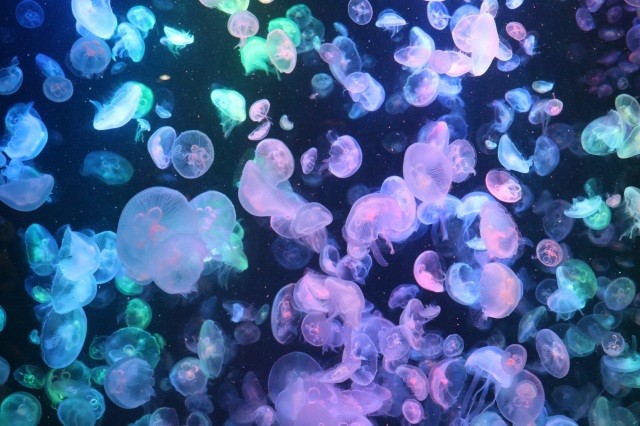
This modern white-walled building by the sea is the world's largest jellyfish aquarium. Kamo Aquarium is the only aquarium in the world that exhibits approximately 80 species of jellyfish at any given time. The cool, transparent form of the jellyfish and their shimmering appearance in the water are like a kind of art. The deep blue tank that glows faintly in the darkness and the jellyfish that turn purple and green make visitors feel as if they have wandered into another world.
The jellyfish exhibition room “Kuranetarium” is filled with many rare jellyfish. The “Jellyfish Dream Theater,” a circular water tank 5 meters in diameter, is especially impressive with 10,000 floating water jellyfish! The “Jellyfish Story” program, which is held every hour, is also a must-see.Be sure to take the “Backyard Tour (fee required)” to see behind the scenes of the jellyfish exhibit.
The “Fin Feeding Time” program, a commentary program on sea lions and seals, and the “Feeding the Seals” experience (fee required) held after the “Fin Feeding Time” are also popular.
Since the aquarium is small but popular, visitors may be asked to refrain from taking pictures of jellyfish during busy times. To avoid crowds, you may want to visit early in the morning, just before the aquarium closes, or between programs.
The museum's restaurants offer a variety of jellyfish dishes, such as jellyfish ramen noodles with chewy jellyfish kneaded into the noodles and jellyfish ice cream with the crunchy texture of jellyfish as an accent. Souvenirs such as jellyfish snacks are sure to be the talk of the town.
※Due to renovations within the current building, the facility will be completely closed from Saturday, November 1, 2025, to Tuesday, March 31, 2026.
The jellyfish exhibition room “Kuranetarium” is filled with many rare jellyfish. The “Jellyfish Dream Theater,” a circular water tank 5 meters in diameter, is especially impressive with 10,000 floating water jellyfish! The “Jellyfish Story” program, which is held every hour, is also a must-see.Be sure to take the “Backyard Tour (fee required)” to see behind the scenes of the jellyfish exhibit.
The “Fin Feeding Time” program, a commentary program on sea lions and seals, and the “Feeding the Seals” experience (fee required) held after the “Fin Feeding Time” are also popular.
Since the aquarium is small but popular, visitors may be asked to refrain from taking pictures of jellyfish during busy times. To avoid crowds, you may want to visit early in the morning, just before the aquarium closes, or between programs.
The museum's restaurants offer a variety of jellyfish dishes, such as jellyfish ramen noodles with chewy jellyfish kneaded into the noodles and jellyfish ice cream with the crunchy texture of jellyfish as an accent. Souvenirs such as jellyfish snacks are sure to be the talk of the town.
※Due to renovations within the current building, the facility will be completely closed from Saturday, November 1, 2025, to Tuesday, March 31, 2026.
Tendo Onsen
A Healing Journey at Tendō Hot Springs
Tendo Onsen, blessed with a location near the center of Yamagata Prefecture and excellent transportation access, has developed as a lodging base for touring the prefecture. Accommodations range from modern hotels to traditional Japanese-style inns. It is a hot spring rich in travel sentiment, gently enveloping the traveler's mood throughout the seasons. Selected for the “34th Japan's Top 100 Hot Springs” by the Tourism Economy News, Tendo Onsen also boasts two establishments chosen for the “Top 250 Popular Hot Spring Inns and Hotels” and “Five-Star Lodgings”: “Smile Inn Takinoyu” and “Tendo Hotel”. Day-trip bathing is also available, allowing visitors to enjoy the hot springs with ease.
Day3
Depart from accommodation
Premium Aerial Walk with Drink Set at Zao Terrace
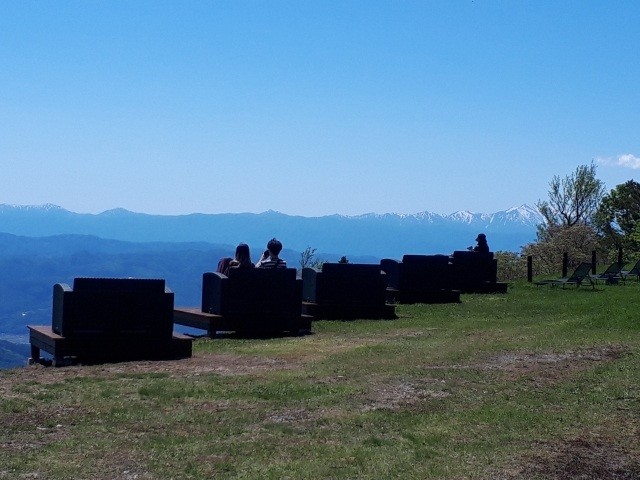
You can visit Zao Jizoson at Jizo Sancho Station to pray for future success or you can trek up to the top of Mt. Kumanodake to see Okama Crater. When you get tired, pick up a drink at Restaurant Sancho and enjoy a scenic view at Sancho Terrace (Zao Terrace).
At Hyakumannin Terrace, located at Zao Terrace outside Juhyo Kogen Station, spend a relaxing time up in the clouds and take some instaworthy photos. The temperature is lower than the city, so you can spend time in comfort, even in summer.
A thematic journey in the Tohoku region:Outdoor activities
At Hyakumannin Terrace, located at Zao Terrace outside Juhyo Kogen Station, spend a relaxing time up in the clouds and take some instaworthy photos. The temperature is lower than the city, so you can spend time in comfort, even in summer.
A thematic journey in the Tohoku region:Outdoor activities
Okama Crater of Zao
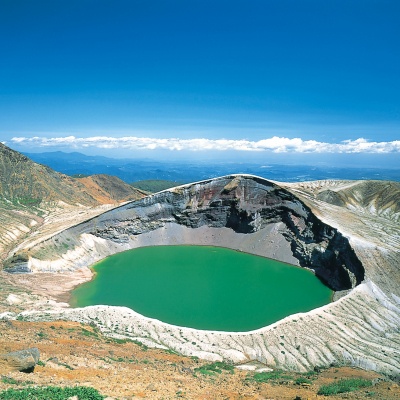
Zao’s iconic crater-lake changes hues depending on the sunlight
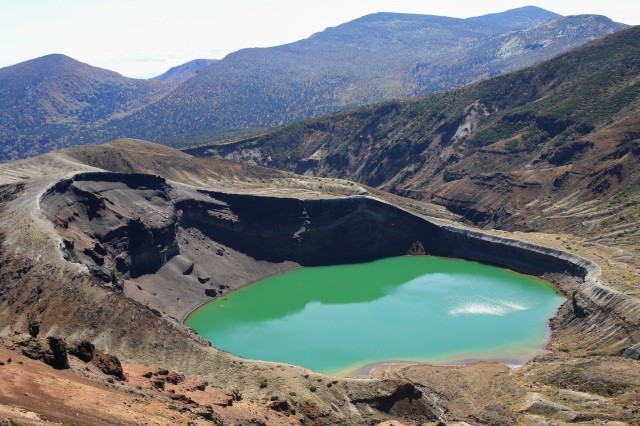
Located on the border of Miyagi and Yamagata prefectures, the Zao Mountain Range has been selected as one of Japan’s 100 most famous mountains. Okama Crater is a crater-lake surrounded by three mountains (Kattadake, Kumanodake and Goshikidake) and, along with its frost-covered trees, is an iconic image of the Zao Mountains. Nicknamed the “Cauldron” because of its appearance, Okama Crater is also known locally as “Goshikilake” (the five-coloured pond) thanks to the changing hues of the water from dark green to blue according to the sunlight. The colours of the crater-lake also fascinate visitors as they change depending on the angle of view. The lake is a kilometre in circumference, 325m in diameter, and has a depth of 27.6m. There is no life in the lake due to strong acidity of the water.
The crater is accessible via a scenic drive along the Zao Echo Line, traversing the Zao Mountains from east to west, to the Zao High Line. The Zao Summit Rest House along the way offers a restaurant and gift shop with a splendid view of Okama Crater. The Zao Echo Line and Zao High Line are open from late April to early November. Please be mindful that these mountain roads are closed during winter.
There is an easy 10-minute trail from Okama Crater to the top of Mount Kattadake (1758m) where the Kattamine Shrine stands worshipping the incarnation of Zao.
The one-hour “Umanose” trekking path leading to Mount Kumanodake offers magnificent views of Okama Crater. Be sure to wear comfortable shoes and suitable clothes.
* The roads and paths around the crater are subject to closure for safety reasons. Please refer to the Japanese Meteorological Agency’s website for the latest warnings.
The crater is accessible via a scenic drive along the Zao Echo Line, traversing the Zao Mountains from east to west, to the Zao High Line. The Zao Summit Rest House along the way offers a restaurant and gift shop with a splendid view of Okama Crater. The Zao Echo Line and Zao High Line are open from late April to early November. Please be mindful that these mountain roads are closed during winter.
There is an easy 10-minute trail from Okama Crater to the top of Mount Kattadake (1758m) where the Kattamine Shrine stands worshipping the incarnation of Zao.
The one-hour “Umanose” trekking path leading to Mount Kumanodake offers magnificent views of Okama Crater. Be sure to wear comfortable shoes and suitable clothes.
* The roads and paths around the crater are subject to closure for safety reasons. Please refer to the Japanese Meteorological Agency’s website for the latest warnings.
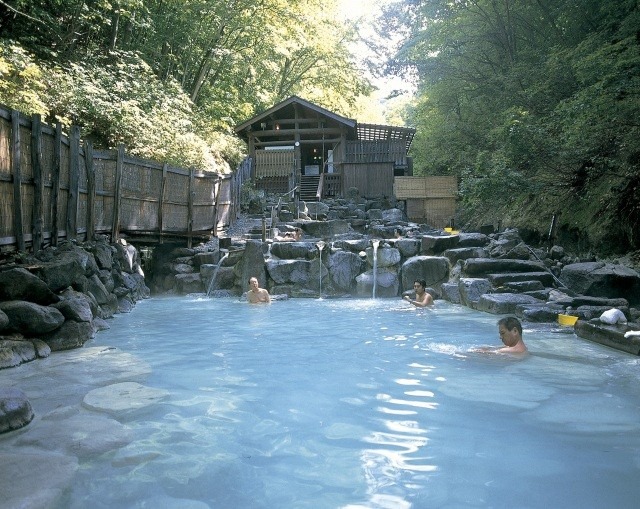
Zao Onsen Great Open -Air Bath
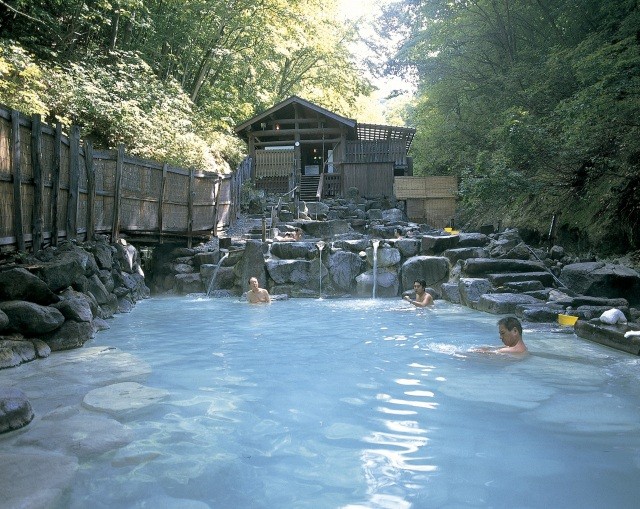
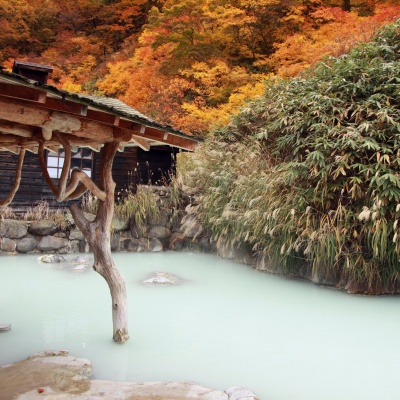
The flow of the river and the chirping of wild birds, the unique sulfur scent of Zao Onsen, the crisp air unique to the highlands, the vast nature that fills your eyes... Zao Onsen's large open-air bath features a continuous flow of fresh spring water.
Yamagata
GOAL